










Ribbed PDC Core Bits: Strengths, Limitations and Global Market Demand
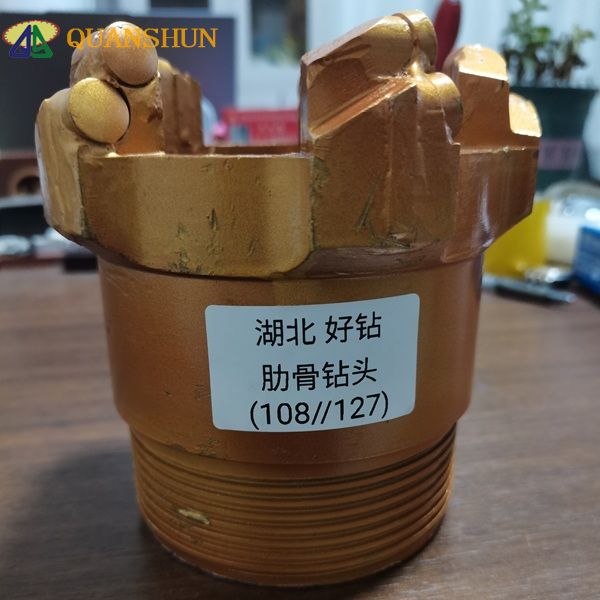
Ribbed PDC core bits represent a specialised variant of polycrystalline diamond compact coring tools, distinguished by raised rib structures on the bit crown. This unique layout targets mixed, fractured and moderately hard rock, making it widely adopted for geological survey, mineral prospecting, foundation investigation and shallow geotechnical drilling.
Core Advantages
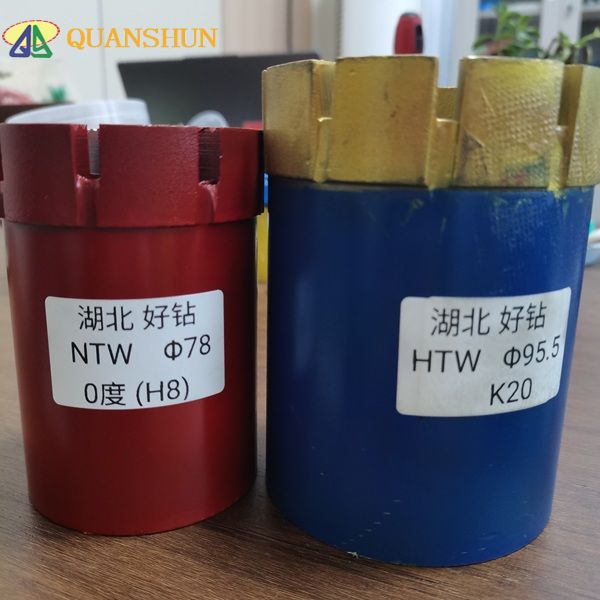
First, the rib‑shaped profile delivers outstanding stabilisation inside the borehole. It suppresses lateral vibration and bit wandering, helping preserve gauge diameter and producing cleaner, more complete rock cores, which is critical for accurate resource evaluation. Second, the rib‑guided flow channel improves cuttings discharge and mud circulation. Compared with flat‑crown PDC bits, it lowers the chance of mud balling in sticky, clay‑rich interbedded formations. Third, it balances penetration speed and impact tolerance well in alternating soft‑hard strata such as limestone, weathered granite and lightly broken rock. Many drilling teams select it when formation conditions remain uncertain, reducing sudden stuck‑pipe incidents and unexpected bit damage. It also runs smoothly on common wireline coring systems like NTW, with relatively low requirements for heavy weight‑on‑bit.
Main Drawbacks
The biggest weakness lies in performance boundaries. Ribbed PDC bits struggle against highly abrasive, dense hard rock; continuous drilling on tough, homogeneous hard formations easily triggers thermal burnout, chipped cutters and premature failure. Its special crown geometry raises manufacturing complexity, so the unit price is usually higher than ordinary flat‑crown PDC core bits. In heavily crushed, loose ground, the ribs may catch broken rock fragments and raise the risk of jamming. Besides, the hydraulic structure is a compromise design: if used in extremely sticky mudstone, the waterway can still get blocked without carefully adjusted pumping parameters.
Market Demand Outlook
Global demand for ribbed PDC coring bits keeps rising, driven by steady investment in mineral exploration, infrastructure geotechnical survey and renewable‑energy geothermal projects. As many mining and engineering contractors prefer one versatile bit for unknown stratigraphy, the ribbed design fills a clear niche between standard PDC bits and fully impregnated diamond bits. Markets across Southeast Asia, Australia and the Middle East show strong purchasing interest, where frequent mixed and fractured rock layers are common in site investigation and mineral sampling.
Nevertheless, the market is segmented. For large‑scale deep hard‑rock mining, operators still turn to impregnated diamond bits. Meanwhile, low‑cost generic copies create fierce price competition, pushing premium manufacturers to focus on customised rib layouts, upgraded PDC cutters and precision matrix formulas. In the long run, the ribbed PDC segment will maintain stable, specialised growth rather than replacing all other coring tools; its value comes from reliable, low‑risk sampling for geologists and drilling contractors facing unpredictable ground conditions.
 NTW vs HTW Wireline Core Bits:
 Ribbed PDC Core Bits: Strength
 Segmented Diamond Saw Blades:
 Segment Count Selection for Di