












How to Match Sawing Tools to Materials and On‑Site Construction Demands
Choosing the right cutting saw is not a one‑size‑fits‑all decision; operators must weigh the material they intend to cut alongside site constraints, cutting accuracy targets and workload intensity. Different saw designs are engineered with separate core functions, so a model ideal for one task may underperform or even create safety risks when misapplied. Even among products from the same factory, size configurations, welding quality, protective mechanisms and user‑friendly features shift heavily depending on whether the tool is built for light intermittent use or heavy continuous industrial cutting.
The market carries a huge selection of sawing solutions tailored for stonework, concrete cutting, metal fabrication and general machining. Many of these cutting tools are purpose‑built to satisfy strict standards for niche industries or highly specialized cutting tasks that demand custom blade geometry and power output.
Fixed bench saws remain the go‑to choice for high‑volume woodworking workshops, delivering stable cuts and consistent precision. On the other hand, handheld portable saws are indispensable for plumbers, electricians and field construction crews, who rely on their mobility for fitting work, renovation and ongoing equipment upkeep. Just like many other hand tools and supporting consumables, various saw styles are often known among veteran workers by common nicknames, popular brand names or classic model numbers that have become standard vocabulary on job sites.
 Segmented Diamond Saw Blades:
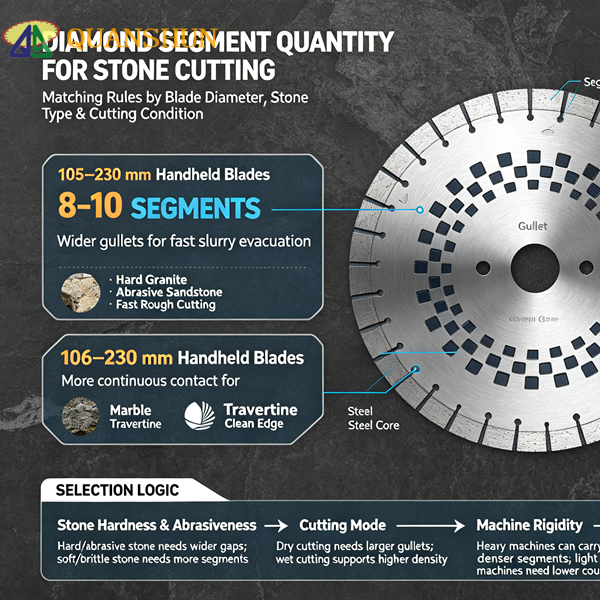 Segment Count Selection for Di

 Polycrystalline Diamond Compac